Pius Nkonzo Langa — Profile
📅 Basic Info
- Born: 25 March 1939, Bushbuckridge (Eastern Transvaal), South Africa
- Died: 24 July 2013, Johannesburg, South Africa
- Family: Second of seven children; married to Thandekile Mncwabe in 1966; their union produced six children.
🚶♂️ Early Life & Education
- Pius Langa grew up in humble circumstances. At age 14, his parents could no longer afford to continue his formal schooling.
- Undeterred, he worked in a shirt factory (from 1957 to 1960) while privately studying to complete his high-school matriculation in 1960.
- He then worked for the Department of Justice — first as a messenger/interpreter, later rising to prosecutor and magistrate.
- Determined to further his education, he enrolled at the University of South Africa (UNISA) via correspondence. He earned a B. Juris degree in 1973 and an LL.B. in 1976.
⚖️ Legal Career & Anti-Apartheid Work
- In June 1977, Langa was admitted as an advocate of the Supreme Court of South Africa and practised at the Natal Bar. He achieved Senior Counsel status in January 1994.
- Throughout the 1980s and early 1990s, he represented underprivileged clients, civic bodies, trade unions, and individuals charged under oppressive apartheid laws. His legal work embodied his commitment to justice and human rights.
- He was a founding member of the National Association of Democratic Lawyers (NADEL), serving as its President from 1988 until 1994 — helping to give legal voice to anti-apartheid activism.
- He also participated in broader civic and political efforts: working with the United Democratic Front (UDF), the Release Mandela Committee, and later in the negotiations that led to democratic transition in South Africa (via the Convention for a Democratic South Africa — CODESA, and the Multi-Party Negotiating Forum).
🏛️ Role on the Constitutional Court & as Chief Justice
- In 1994, when the Constitutional Court of South Africa was established in the post-apartheid era, Langa was appointed one of the first 11 judges.
- He became Deputy President of the Court in August 1997.
- In November 2001, he was appointed Deputy Chief Justice of South Africa.
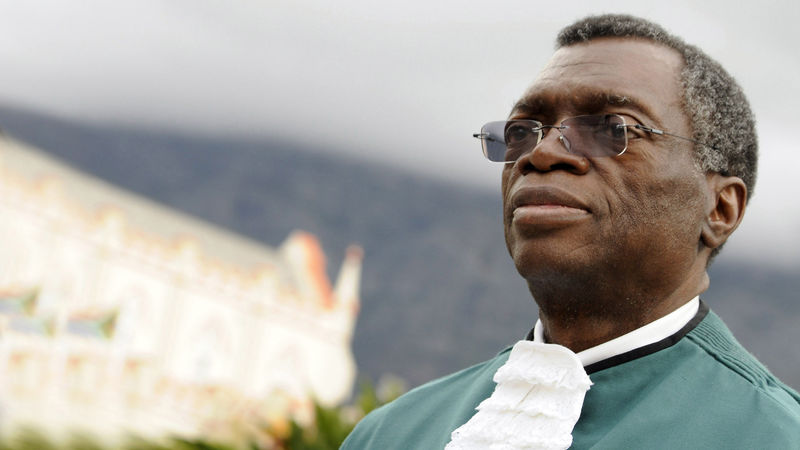
- On 1 June 2005, he was elevated to Chief Justice, becoming head of the Constitutional Court — the first Black African to hold that office.
- He served as Chief Justice until his retirement in October 2009.
🌍 Wider Impact & Legacy
- As Chief Justice, Langa chaired the Judicial Service Commission and the Southern African Judges Commission, helping shape the judiciary and strengthen judicial independence in South Africa.
- His jurisprudence was marked by a profound concern for human dignity, equality, and the rights of vulnerable groups. He spoke strongly against capital punishment, arguing that a society committed to human rights must respect the dignity of every life.
- Langa’s reputation extended beyond South Africa. He was involved in constitutional reform and legal advisory roles in several countries — contributing to democratic transitions in places such as Lesotho, Fiji, Rwanda, Zimbabwe, Tanzania, Sri Lanka, and more.
- For his lifelong commitment to justice and human rights, he received numerous honours — among them the Order of the Baobab (Gold) in 2008.
💡 Significance
Pius Langa’s journey — from factory-worker, court messenger, part-time student, to Chief Justice — is a powerful testament to resilience, hard work, and the belief in law as a force for justice. He played a pivotal role in dismantling apartheid-era injustices and building the constitutional foundation of a democratic South Africa. Through his judgments, leadership, and advocacy, he helped embed values of human rights, dignity, and equality into the country’s legal framework.