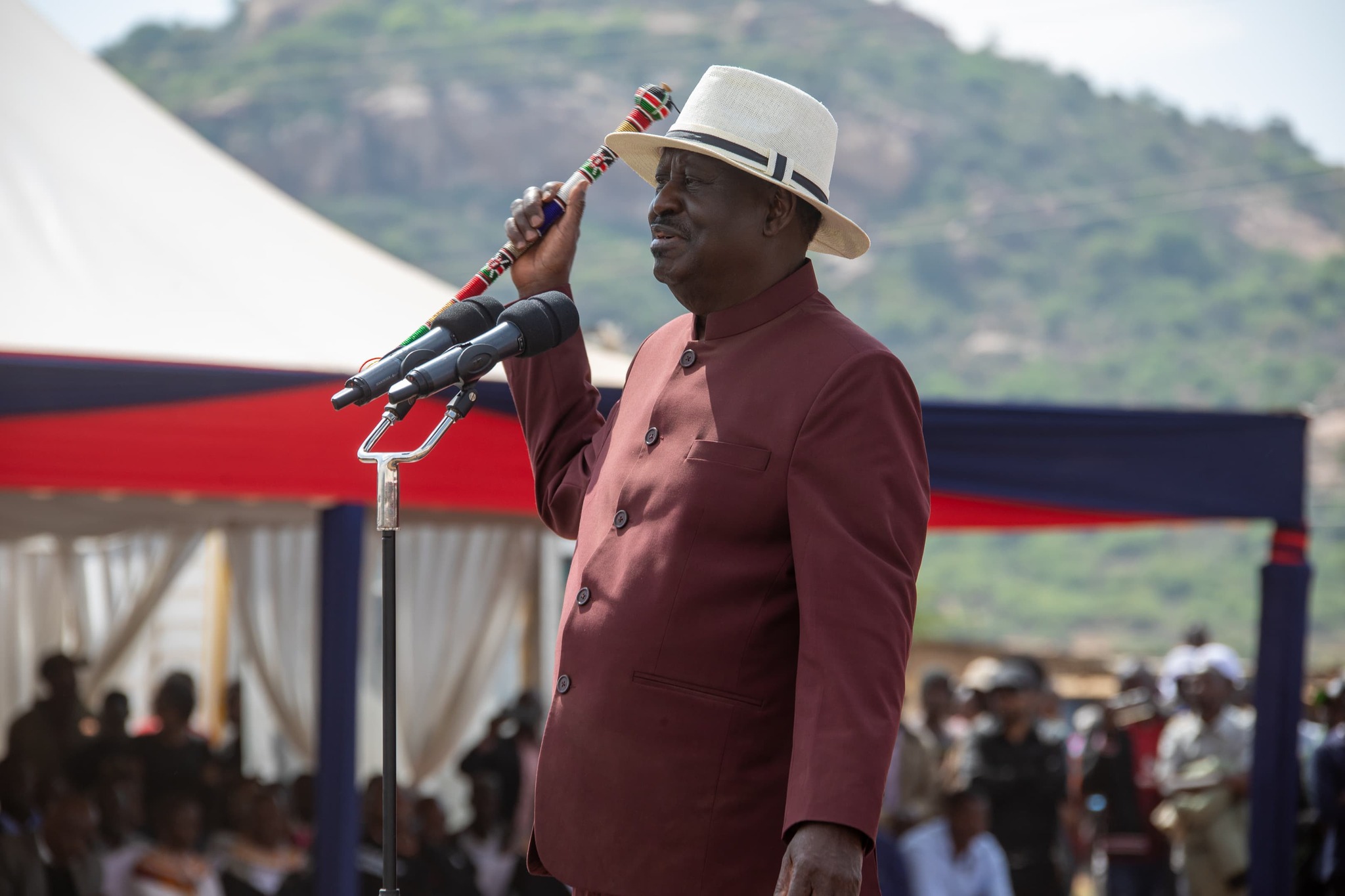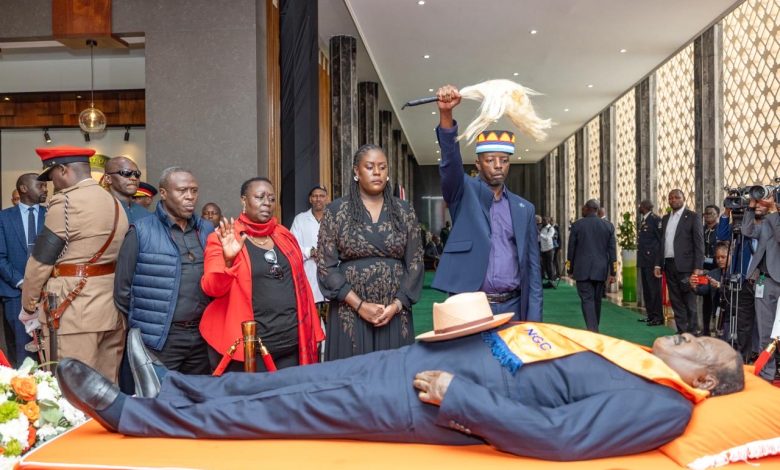
NAIROBI, Kenya — October 17, 2025: The late former Prime Minister and opposition leader Raila Amolo Odinga, widely regarded as a Kenyan icon of democracy and reform, was laid in state at Parliament Buildings in Nairobi on Friday. Thousands of mourners gathered to pay their final respects to a man who, for over five decades, shaped Kenya’s political conscience and inspired movements for justice across Africa.
🕊 A Rare National Honour
Odinga’s body, draped in the Kenyan national flag, lay in state for public viewing—a privilege traditionally reserved for sitting or former presidents. The move signified the country’s recognition of his immense contribution to national unity, democracy, and constitutional reform.
Crowds formed long queues outside Parliament Road, with mourners singing freedom songs and waving flags of the Orange Democratic Movement (ODM)—the party Odinga founded and led for decades.
President William Ruto, his deputy Rigathi Gachagua, and former President Uhuru Kenyatta were among the dignitaries who attended the solemn ceremony. In a moving tribute, President Ruto described Odinga as “a statesman who challenged us to be better, to think boldly, and to place Kenya above self.”
🌍 Tributes from Home and Abroad
Messages of condolence poured in from across the globe.
- African Union Commission Chairperson Moussa Faki Mahamat praised Odinga as “a pan-Africanist whose vision extended beyond Kenya’s borders.”
- Former Nigerian President Olusegun Obasanjo, a long-time ally, called him “a bridge between generations of African leaders.”
- United Nations Secretary-General António Guterres noted that Odinga’s “commitment to dialogue and democratic reform” had left a mark far beyond East Africa.
In Kisumu, Odinga’s home county, candlelight vigils and processions filled the streets as locals gathered to sing his favourite liberation songs.
⚖ Defender of Democracy
Born in 1945, Raila Odinga was more than a politician—he was a movement. His lifelong struggle for multiparty democracy during Kenya’s single-party era led to multiple imprisonments and years of sacrifice. Despite contesting the presidency five times, he never held the office, yet his influence transcended electoral politics.
He played a pivotal role in shaping the 2010 Constitution, a milestone that redefined Kenya’s governance and devolved power to local governments. To millions, Odinga embodied resilience, vision, and the audacity to question authority.
🕯 The Final Journey
Following the public viewing, Odinga’s body was transported under full state escort to Uhuru Gardens for an interfaith prayer service. His state funeral is scheduled to take place in Bondo, Siaya County, on October 19, where he will be buried beside his late son, Fidel.
Security has been heightened nationwide, with thousands expected to attend. Local and international media have described the farewell as one of the most significant state commemorations in Kenya’s post-independence history.
❤️ A Legacy Beyond Politics
At Parliament, an elderly mourner was heard saying, “We didn’t just lose a leader; we lost Kenya’s moral compass.”
Younger generations remembered Odinga as a voice for fairness, inclusivity, and good governance—qualities that earned him the affectionate nickname “Baba”, meaning Father of the Nation’s Conscience.
As flags flew at half-mast, Kenya stood united in grief and gratitude, honouring a man whose vision continues to echo through the corridors of leadership, classrooms, and homes across the country.
DISCLAIMER: The Views, Comments, Opinions, Contributions and Statements made by Readers and Contributors on this platform do not necessarily represent the views or policy of ghanamourns.com.